 WebEaze
What Makes a Good Small Business Website? 5 Things That Convert Visitors
Most small business websites look fine but do not actually bring in customers. The difference comes down to five things that most business owners overlook when building a site.
By WebEaze Team

A good small business website does five things well: it loads fast, clearly explains what you do and who you serve, gives visitors an obvious next step, shows proof that you are credible, and is easy to find on Google. Miss any one of these and your site will cost you customers instead of bringing them in.
Most business owners assume a website either "looks good" or it does not. But design is actually one of the smaller factors in whether a website brings in customers. There are sites that look polished but convert almost no one, and there are modest-looking sites that consistently turn visitors into calls and bookings.
The difference comes down to five things. All five can be measured, and all five can be fixed.
It loads in under 3 seconds
Google has published research showing that 53% of mobile visitors leave a page if it takes more than 3 seconds to load. That is not a mild preference. That is more than half your potential customers leaving before they ever see your business.
Page speed is also a Google ranking factor, meaning a slow site hurts your chances of being found in the first place. Common culprits are large uncompressed images, too many third-party scripts, and poorly built templates from website builders that carry bloated code.
Go to PageSpeed Insights (pagespeed.web.dev) and test your site. A score below 70 on mobile means visitors are probably leaving before the page finishes loading.
It immediately answers "what do you do and who is it for?"
When someone lands on your site, they decide within seconds whether to keep reading or go back to Google. The first thing they look at is your headline. If that headline does not clearly communicate what you do and for whom, most visitors will leave.
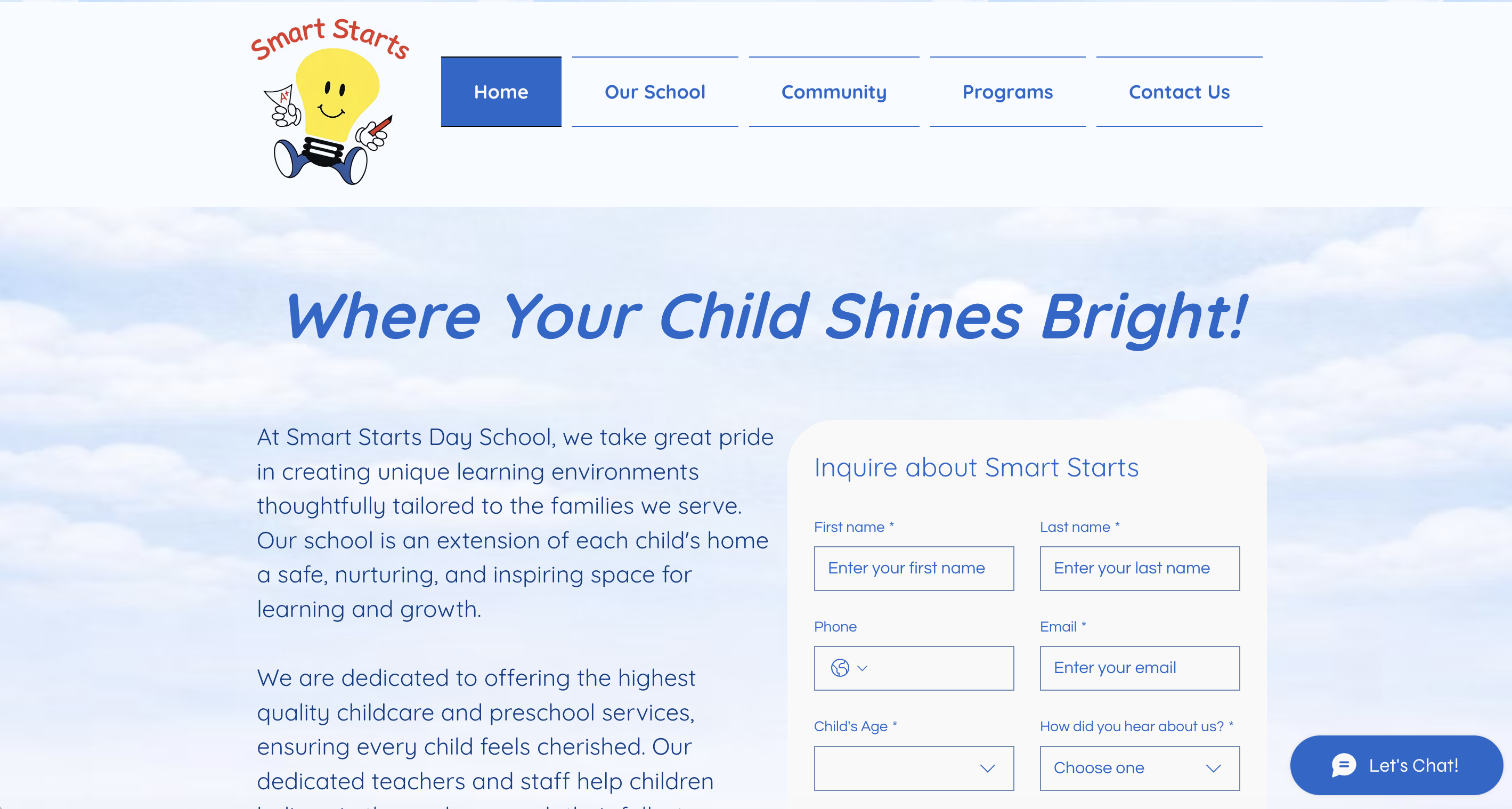
Generic headlines like "Welcome to Our Website" or "Quality Service You Can Trust" tell a visitor nothing. A headline like "Residential Plumbing Repair in Baltimore, MD" tells them exactly what you do, where you operate, and whether they are in the right place.
Think about your headline from the perspective of someone who has never heard of your business. Does it answer "what do you do?" within the first few words? If not, it needs rewriting.
There is one clear next step for the visitor to take
Every page on your site should have a primary action you want visitors to take: call now, book an appointment, request a quote, or fill out a contact form. If you have six different buttons pointing in different directions, visitors freeze up and do nothing. This is called decision paralysis, and it is one of the most common reasons websites fail to generate leads.
Pick the one thing you want each type of visitor to do and make it obvious. For most service businesses, that is a phone call or a form submission. One primary button, above the fold, with a clear label. That is all you need.
It shows proof that you are credible
When someone finds your business online, they do not know you. They have no reason to trust you yet. Your website's job is to give them that reason. The elements that do this most effectively are:
- Real customer reviews: Embedded Google reviews or testimonials with actual names. Not generic quotes without attribution.
- Photos of real work: Before-and-after photos, photos of your team, photos of your shop or job sites. Stock photos read as fake because they are.
- Specifics about your business: How long you have been operating, how many clients you have served, what service area you cover. Numbers and specifics build trust faster than adjectives.
- Contact information visible on every page: A phone number and address in the header or footer signals that you are a real, reachable business.
Want to see what a properly built, high-converting website looks like for your business?
Get a free previewGoogle can find it and understand what it is about
A website that nobody finds is a website that does not work, no matter how good it looks. Local SEO is the process of making sure your site shows up when someone nearby searches for what you offer. The basics include:
- Page titles and headings that include the service and location (for example: "HVAC Repair in Richmond, VA")
- A page for each service you offer, not one page covering everything vaguely
- Your business name, address, and phone number matching exactly what is listed on Google
- Fast load times on mobile (back to point one)
- A verified and complete Google Business Profile that links to your site
Most small business websites skip several of these. Getting them right does not require a large budget, but it does require someone who knows what they are doing.
The common thread
Notice that none of the five things above are about how the website looks. Good design matters in the sense that it should not look unprofessional or feel broken. But the thing that separates websites that generate customers from ones that do not is structure, speed, and clarity. A beautifully designed site that loads slowly, has a vague headline, and no clear call to action will underperform a simple, fast, focused site every time.
If your current website has issues in even two or three of these areas, it is worth addressing them before investing in anything else. Paid ads, for example, send traffic to your website. If that website does not convert, you are paying for traffic that goes nowhere.